+
24/7 emergency response and stabilization
We prioritize safety first: hazard assessment, temporary power considerations, roof tarp or board-up coordination when needed, and moisture control to limit additional damage.
Serving Minneapolis, Minnesota & surrounding areas
Emergency cleanup, smoke and soot removal, and reconstruction coordination to get your property safe, dry, and livable again. We respond 24/7 and work directly with insurance when you want help.
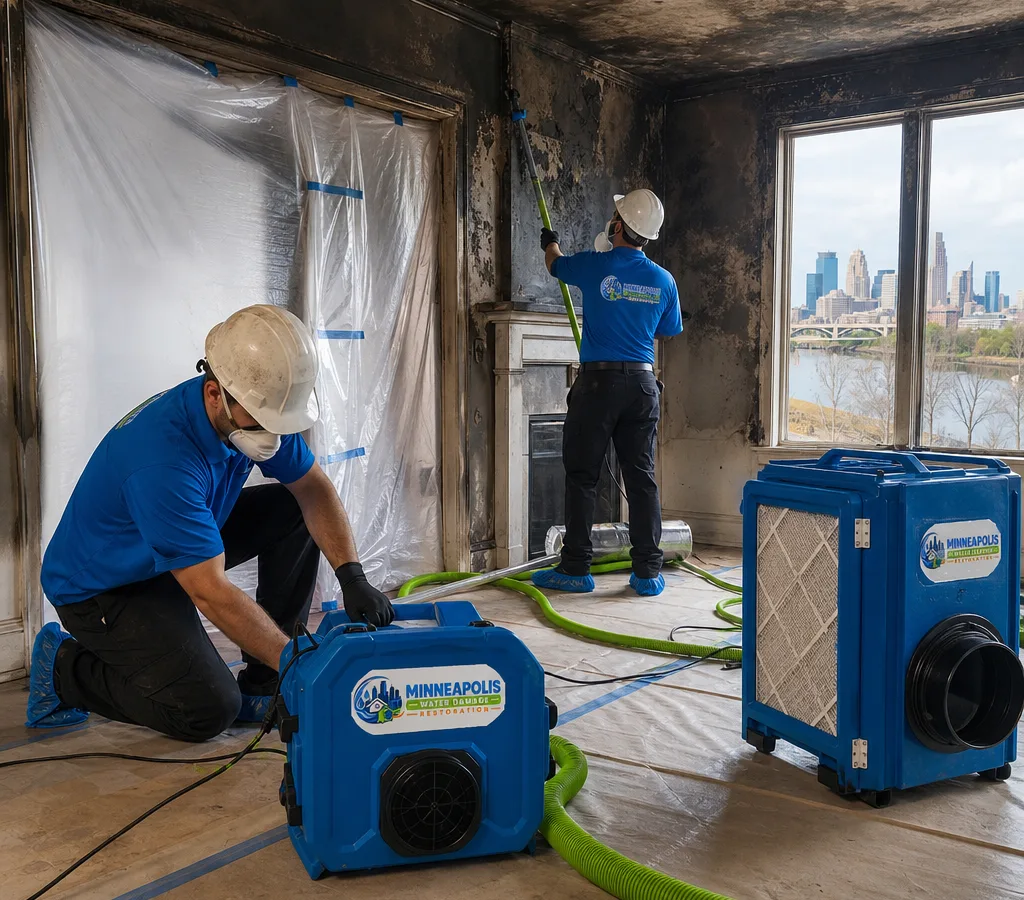
If you are searching for fire damage restoration Minneapolis MN, you are usually dealing with more than charred materials. A fire often leaves smoke odor, soot residue that spreads through HVAC returns, water from suppression, and humidity that can trigger secondary damage within days.
Professional fire restoration is a managed process: securing the structure, documenting loss, removing unsalvageable materials, cleaning soot from surfaces, controlling odor, drying wet areas, and restoring finishes. The earlier the site is stabilized, the easier it is to prevent corrosion on metals, staining on porous materials, and odor absorption in insulation, framing, and soft goods.
Minneapolis properties add their own realities. Older homes common in areas like Powderhorn and Longfellow can have plaster walls, lathe, and layered renovations that hide soot pathways. Condo buildings near Downtown and the North Loop can require strict containment and coordination for shared corridors and ventilation. Cold-season fires also bring freeze risk if windows are boarded but heat is out, so protecting water lines and maintaining safe temperatures becomes part of the plan.
We prioritize safety first: hazard assessment, temporary power considerations, roof tarp or board-up coordination when needed, and moisture control to limit additional damage.
We use negative air, HEPA filtration, and controlled work zones so soot does not migrate into clean areas or neighboring units.
Deodorization starts with removing affected materials and detailed cleaning, then uses tools like HEPA air scrubbers and thermal fogging or hydroxyl/ozone methods when appropriate for the space.
Firefighting water often reaches wall cavities and subfloors. We extract, set drying equipment, and verify dryness with moisture readings before rebuild work starts.
We photograph conditions, track equipment time, and write a scope that supports claim review and helps keep the project organized.
After cleaning and drying, we coordinate repairs such as drywall replacement, insulation, painting, flooring, and trim so the home or business can return to normal use.
Every loss is different, but good restoration follows the same fundamentals: safety, containment, removal, cleaning, drying, and verified readiness to rebuild.
We start by identifying what is affected by heat, soot, and water, not just what is visible. That includes checking attic spaces, soffits, and HVAC pathways where smoke can travel. In multi-unit buildings, we pay special attention to shared chases and any areas that could affect neighbors.
Next is controlled demolition and cleaning. Materials that cannot be effectively cleaned, like heavily charred framing, saturated insulation, or porous items with deep smoke infiltration, are removed. Remaining surfaces are cleaned with methods matched to the soot type (dry sponge, alkaline cleaning, or other specialized agents), then sealed where needed to lock in remaining staining and odor.
If water is present, drying is not optional. We extract water, set dehumidification, and monitor moisture content until materials meet drying goals. Only then do we move into repairs. If you are also dealing with active leaks, flooding, or burst pipes, our team at Minneapolis Water Damage Restoration also handles water damage restoration so the drying and rebuild plan stays consistent.
Throughout the project you get a written scope and straightforward updates, so you know what is being cleaned, what must be replaced, and what the timeline depends on.
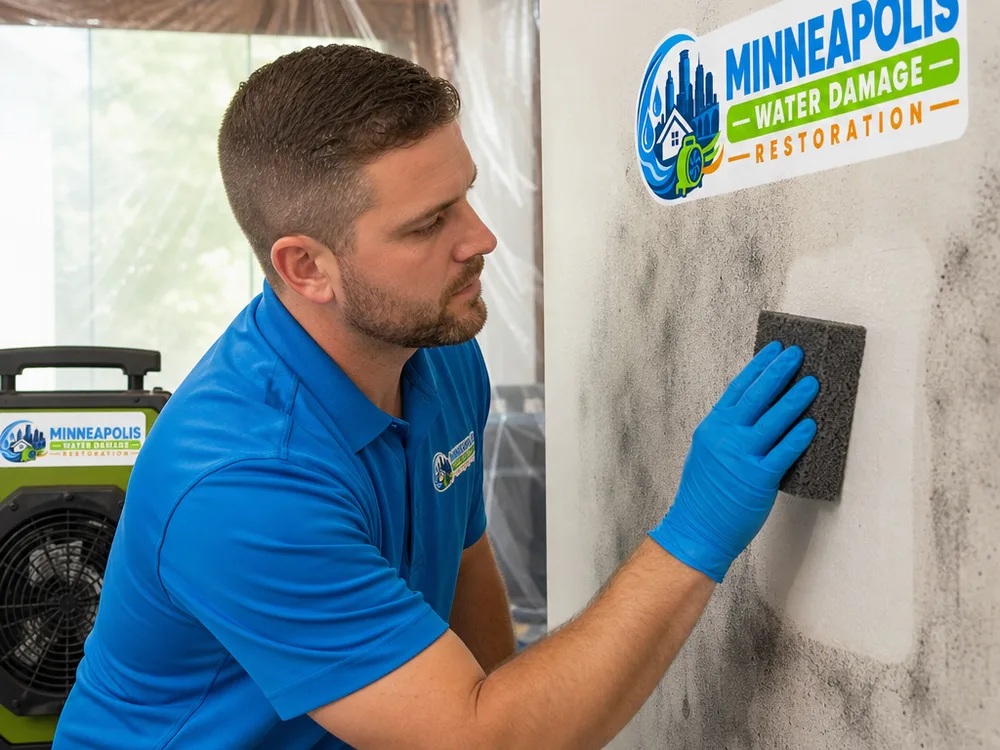
We assess structural stability, electrical risks, and air quality concerns, then establish containment and airflow control. If areas must be secured, we coordinate board-up and temporary protections.
We document conditions with photos and notes, identify salvageable versus non-salvageable materials, and write a clear scope that can be shared with insurance and any involved parties.
We remove charred materials, damaged contents as approved, and any wet porous building materials that will not dry safely. Work is performed to limit soot spread.
We clean surfaces using the correct chemistry and tools for the soot type, address odor sources, and evaluate vents and returns where smoke residue commonly settles.
If water was used to extinguish the fire, we extract and dry structural materials, then verify dryness with moisture readings before moving to rebuild.
We coordinate repairs like drywall, paint, flooring, trim, and finish details. The goal is a safe, clean result that matches the agreed scope.
Fire damage restoration in Minneapolis typically ranges from about $3,000 to $12,000 for smaller, contained losses, while heavier soot cleanup with demolition, drying, and repairs can run $15,000 to $60,000+ depending on how many rooms are affected and whether structural components were damaged.
Final pricing depends on soot type and spread, how much material must be removed, odor penetration, water damage and drying time, specialty cleaning (HVAC, contents), access constraints in multi-unit buildings, and the level of rebuild needed. The exact cost is confirmed after an on-site inspection and a written scope.
“After a small kitchen fire, the smell and soot were everywhere. The crew set up containment the same day, cleaned the duct returns, and gave us a clear scope for insurance. The house finally smelled normal again before repairs even started.
“We manage a small retail space and needed to reopen quickly. They coordinated debris removal, drying, and repairs in phases so we could get back to business while the last areas were finished.
Response is available 24/7, and the goal is to stabilize the site as soon as possible so soot and moisture do not cause secondary damage. Early steps usually include safety checks, containment, and starting air filtration and drying if water is present.
Yes, we can coordinate directly with your insurance adjuster and provide documentation to support the claim. It helps to have your claim number (if already issued), a brief timeline of what happened, and any photos you took before cleanup.
Smoke odor can usually be eliminated when the source is fully addressed, which means removing contaminated porous materials, detailed soot cleaning, and then using targeted deodorization tools as needed. Persistent odor is almost always tied to residue left behind in cavities, insulation, or HVAC pathways.
It depends on the extent of soot, odor, and any structural or electrical concerns. For a single contained area, some households can remain on-site with proper containment; for larger losses, temporary relocation is often recommended while demolition, heavy cleaning, and drying are underway.
Small, localized losses may be cleaned and stabilized within several days, while projects with demolition, drying, and rebuild can take multiple weeks. Timelines are driven by inspection findings, drying verification, material lead times, and insurance approvals for the scope.
If authorities have cleared the property for entry, avoid disturbing soot, keep doors to affected rooms closed if possible, and do not run HVAC because it can spread residue. If water is present, move valuables to a dry area only if it is safe to do so and avoid using household vacuums on soot since they can aerosolize fine particles.
Tell us what happened and what areas were affected. We will assess the fire, smoke, and any water impact, then provide a written scope and practical next steps for cleanup, deodorization, and repairs.