+
Moisture check and scope
We verify where moisture is present and identify what materials are impacted so the work plan matches the real conditions, not guesses based on what is visible.
Serving Minneapolis, Minnesota & surrounding areas
If you smell a musty odor, see staining, or have had water in the home, mold can spread fast. Our certified team finds the source, contains the area, removes contamination safely, and leaves you with a clear scope and documentation for next steps.
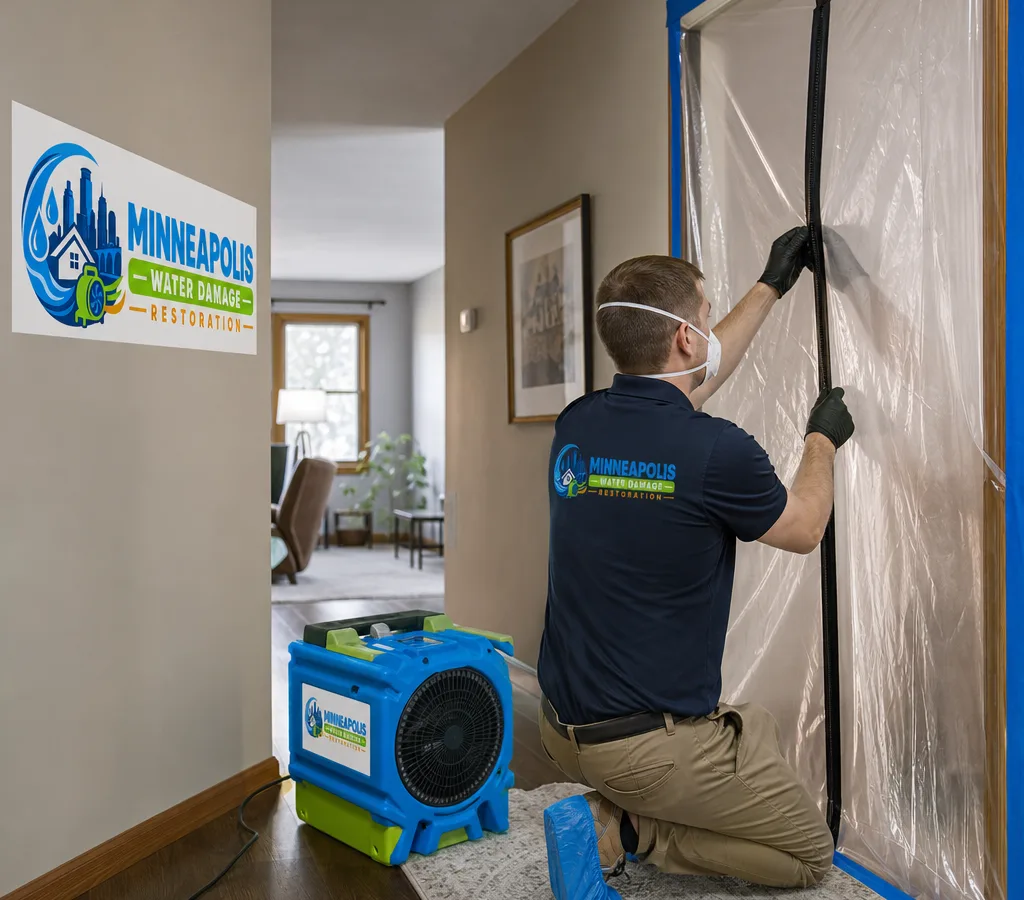
Mold remediation Minneapolis homeowners need is rarely just a surface clean. If moisture remains in a wall cavity, under flooring, or in an attic, mold can return even after it looks better.
Our process starts with a practical inspection: we look for the moisture source—leaks, condensation, or past water intrusion—define what building materials are affected, and map out containment so spores are controlled during removal. Minneapolis basements and older assemblies can hide moisture in rim joists, behind finished walls, and around penetrations, so we pay special attention to enclosed spaces and air pathways.
If your mold situation followed a leak, seepage, or storm-related water problem, the fix often overlaps with drying and cleanup steps. Materials should be dry and stable before rebuild or paint.
We verify where moisture is present and identify what materials are impacted so the work plan matches the real conditions, not guesses based on what is visible.
We isolate the work area with plastic barriers and use HEPA-filtered air scrubbers to reduce airborne spores during demolition and cleaning.
Porous materials that cannot be reliably cleaned—often drywall, insulation, and some carpet and padding—are removed and bagged for proper disposal.
We HEPA-vac surfaces, clean framing and hard materials with appropriate antimicrobial methods, and repeat passes where needed.
We set dehumidification and airflow to bring materials back toward normal moisture levels, which is essential for preventing regrowth.
You get a written scope, photos, and notes on what was removed, cleaned, and dried so you can make informed decisions about repairs and future prevention.
Mold needs moisture. In Minneapolis, the most common triggers we see are:
Homes in neighborhoods like Longfellow and Powderhorn often include older basements and wall assemblies where past moisture can linger behind finishes. In Uptown and Northeast, we also see mold in multi-unit buildings where a leak can travel between floors or units before it is noticed.
If you are deciding whether a situation is a DIY wipe-down or a professional remediation job, the deciding factors are usually hidden growth, porous material involvement, and whether you can isolate the area so spores do not spread through the home.
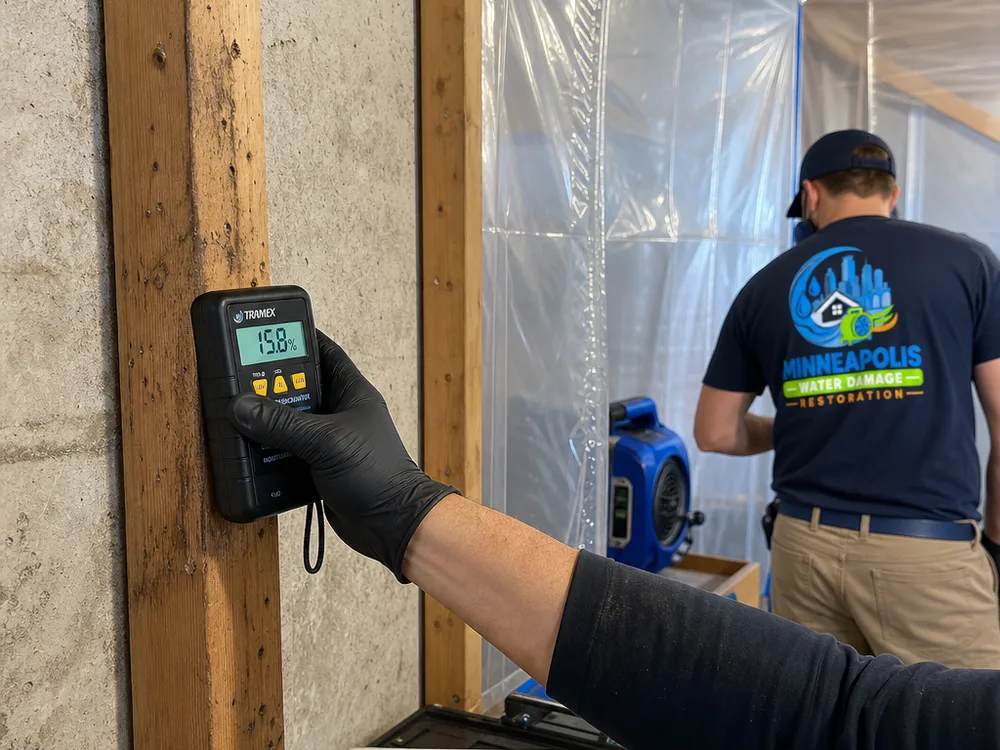
We assess the affected areas, look for the moisture source, and explain what needs to be removed versus what can be cleaned. You receive a clear scope before major work begins.
We isolate the workspace with barriers and establish HEPA filtration. For larger or sensitive projects, we set negative air pressure to keep particles from migrating.
We remove compromised porous materials and clean structural components. Debris is bagged and handled to minimize cross-contamination.
We HEPA-vac and wipe down surfaces, then apply appropriate treatments where needed. The goal is a clean, dry substrate ready for repair.
We confirm moisture levels are trending down, advise on repair steps, and share documentation. If we spot conditions likely to cause recurrence, we point them out so you can address them.
Most mold remediation jobs in Minneapolis typically range from about $1,500 to $6,500, with small, contained areas sometimes closer to $800 to $1,500 and larger multi-room or crawlspace/attic projects reaching $7,500 to $15,000+.
Price depends on the size of the affected area, whether drywall or insulation must be removed, how hard the space is to access, the containment level required, and whether drying equipment is needed to correct moisture. The exact cost is confirmed after an on-site inspection and written scope.
“We had mold behind finished basement walls after a slow leak. The crew set up containment, removed the affected drywall and insulation, and showed us moisture readings as things dried out. The documentation made it easy to plan repairs.
“They were straightforward about what needed to come out and what could be cleaned. The air scrubbers ran the whole time, and the house never had that musty smell afterward.
You usually need professional mold remediation when mold involves porous materials such as drywall, insulation, or carpet padding, when the affected area is more than a small spot, or when growth is likely inside a wall, ceiling, or HVAC pathway. A musty odor with no visible source often points to hidden growth that requires inspection and controlled removal.
Most residential mold remediation projects take 1 to 3 days on site, plus additional time if drying is needed before repairs. Timelines depend on how many rooms are involved, whether demolition is required, and how quickly moisture levels come down in Minneapolis's changing seasonal humidity.
Many projects can be scoped by visible conditions and moisture investigation, but testing can be added when you need baseline information or independent confirmation. Clearance testing is most useful when the project is larger, when sensitive occupants are involved, or when you want third-party documentation after remediation and drying are complete.
Yes, mold can return if the moisture source is not corrected or if humidity stays high in the same area. Effective remediation removes contamination and addresses drying, but long-term prevention depends on fixing leaks, improving ventilation, and keeping basement and bathroom moisture under control.
Yes. When mold follows water intrusion, the work plan often combines drying, removal of impacted materials, and HEPA cleaning so the structure is dry before rebuilding. If the underlying issue is active water damage, resolving that first is typically the fastest path to preventing repeat growth.
If it is safe, stop the moisture source by shutting off a leaking supply line, placing a bucket, or running a bathroom fan, and avoid disturbing the affected area. Do not scrape or dry-brush mold, since that can spread spores; we will set containment and handle removal under controlled conditions.
Tell us what you are seeing and where it is happening. We will schedule an inspection, explain what needs to be removed versus cleaned, and provide a written scope with straightforward next steps for your Minneapolis home.