Water restoration · Minneapolis

Minneapolis Water Restoration

Stop the spread of damage fast with professional water extraction, structural drying, and documented moisture control for homes and businesses across Minneapolis.

Professional extraction Moisture mapping Documented drying
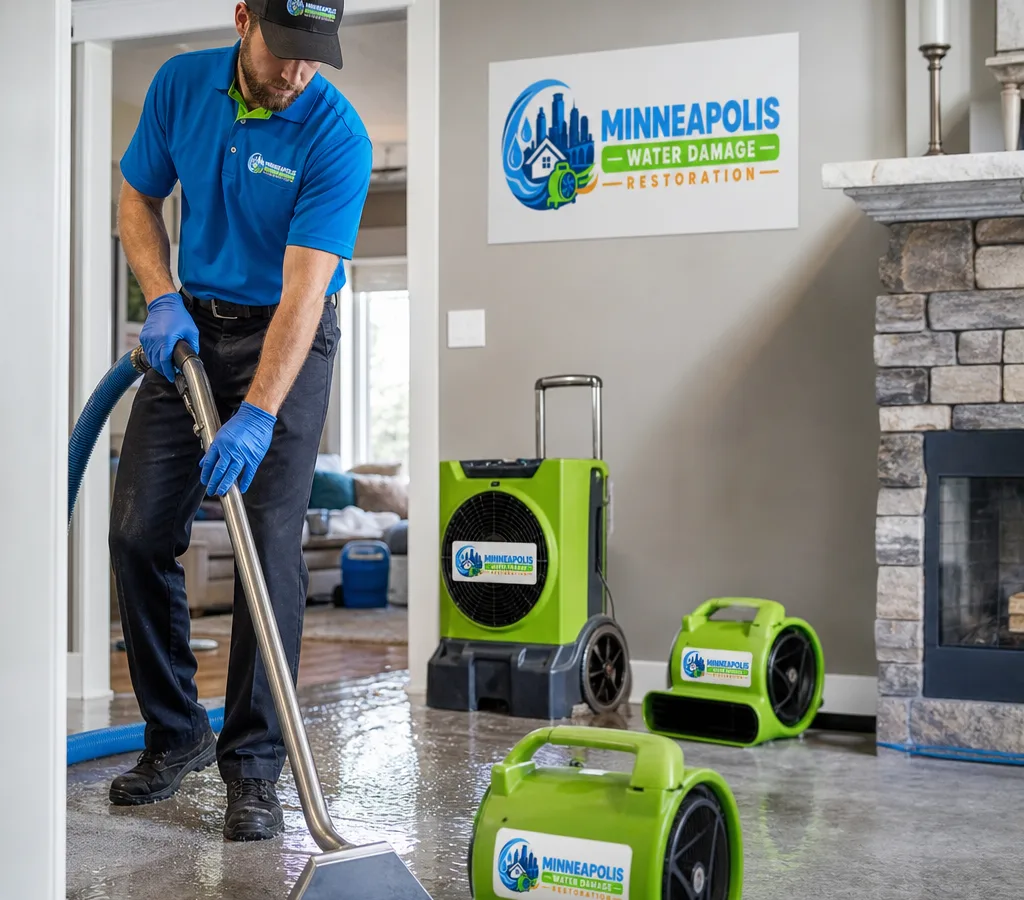
Technician in protective gear extracting water from a wet floor in a Minneapolis home with air movers nearby

Fast response for minneapolis water restoration when minutes matter

Water damage changes by the hour. What looks like a simple puddle can turn into swollen baseboards, buckled flooring, and hidden moisture in wall cavities. Our team at Minneapolis Water Damage Restoration handles minneapolis water restoration with the equipment and process needed to dry the structure, not just the surface.

We respond to common Minneapolis sources of water damage: burst or leaking supply lines, overflowing fixtures, appliance failures, ice-dam and meltwater intrusions, roof leaks, and seepage after heavy rain. In older parts of the city where plaster walls and layered flooring are common, water can travel farther than you expect. In finished basements, moisture can hide behind insulation and paneling until odors or staining show up.

If you are still dealing with standing water, priority one is safe extraction and moisture control. If the water is already gone, priority one is verifying where moisture remains. Either way, the goal stays the same: dry materials to appropriate targets, prevent secondary damage, and document what was done so you have a clear record for decisions and insurance.

For a broader overview of related damage cleanup and repair situations, you can also reference our water damage restoration service coverage for Minneapolis.

Complete moisture control

What professional water restoration includes

+

Water extraction and controlled removal

We remove standing water and wet contents first, then determine what materials need to be detached or removed to allow proper drying, including saturated padding or trapped moisture behind baseboards.

Structural drying with air movement and dehumidification

Drying is set up based on affected materials and moisture load. Air movers, dehumidifiers, and containment dry efficiently without spreading dust through the property.

Moisture mapping and verification

We use professional moisture meters and mapping to locate wet areas, track drying progress, and confirm when structural components return to acceptable moisture conditions.

Cleaning, odor control, and sanitizing when appropriate

Surfaces may need cleaning and antimicrobial treatment based on the water category and affected materials. Deodorization is used when materials develop musty odors.

Repair planning and coordination

Once drying is complete, we outline needed repairs, from drywall and trim to flooring and paint. You receive a written scope before work starts.

Request Emergency Service
Local building conditions

How water damage behaves in Minneapolis homes

Minneapolis has a wide mix of building types, and the construction details change how water spreads and how we dry it.

In Uptown and around the lakes, many properties include older assemblies: plaster walls, original subfloors, and multiple flooring layers from past remodels. These layers can trap moisture and slow evaporation, so drying plans often involve targeted removal to reach wet materials.

In Northeast, it is common to see a mix of older homes and converted spaces where moisture can move along framing and behind finishes. Small leaks around kitchens, bathrooms, and laundry areas can saturate the wall base for days before being noticed.

In newer condos and commercial spaces in Downtown, water can travel between units and through shared chases. In these cases, careful moisture mapping and clear documentation matter for coordination with property management and neighbors.

Seasonally, freeze-thaw conditions can lead to unexpected water entry. When snowmelt or ice buildup finds a path inside, the damage often shows up along exterior walls, window areas, and ceiling lines. The earlier drying begins, the less likely you are to face swollen materials and persistent odor issues.
Request Emergency Service
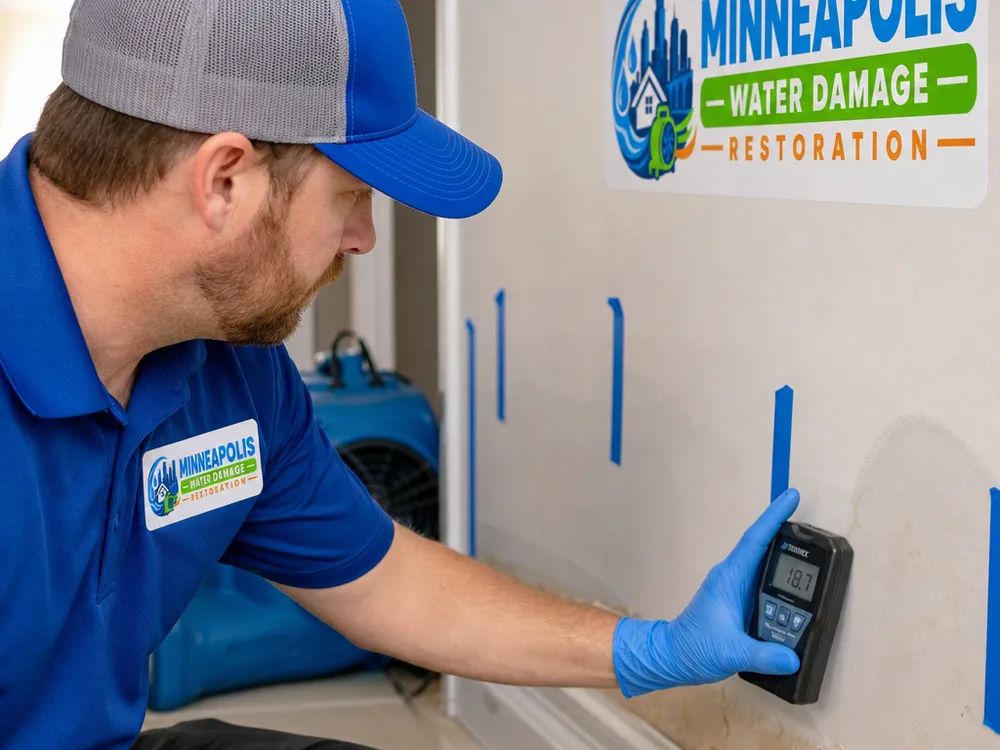
Moisture meter readings on baseboards and drywall with mapped wet areas marked for drying verification
From source to repair plan

Our Minneapolis water restoration process

Request Emergency Service
01

Safety check and source control

We start by confirming the water is stopped and the area is safe to enter. If power shutoff or appliance isolation is needed, we flag it right away so restoration work does not create new hazards.

02

Inspection and moisture mapping

We identify affected materials and map moisture in floors, walls, and ceilings. This guides the drying plan and avoids tearing out materials that can be dried in place.

03

Extraction and selective removal

Standing water is extracted first. Then we remove materials that cannot be effectively dried or that block access to wet assemblies, such as saturated padding or damaged drywall sections.

04

Drying setup and monitoring

We place air movers and dehumidifiers based on the moisture load and building layout. Drying is monitored and adjusted as readings change. The goal is consistent progress, not guesswork.

05

Cleaning and restoration planning

Once the structure is dry, we clean affected surfaces and address odor when needed. You receive a clear scope for any rebuild or finish repairs so you can make informed choices.

Planning the scope

How Much Does Minneapolis Water Restoration Cost in Minneapolis?

Minneapolis water restoration typically ranges from about $1,500 to $7,500 for many residential losses, with large or complex jobs running higher when multiple rooms, ceilings, or specialty flooring are affected. A small, contained incident with quick extraction and drying may fall closer to $800 to $2,000, while widespread water migration and material removal can push costs well beyond $10,000.

Final price depends on the water category, how long materials stayed wet, how many layers must be opened for drying, equipment days, and rebuild needs after drying. Exact pricing is confirmed after an on-site inspection and moisture mapping.

Request Emergency Service
Field examples

Water damage cleanup and drying work (typical examples)

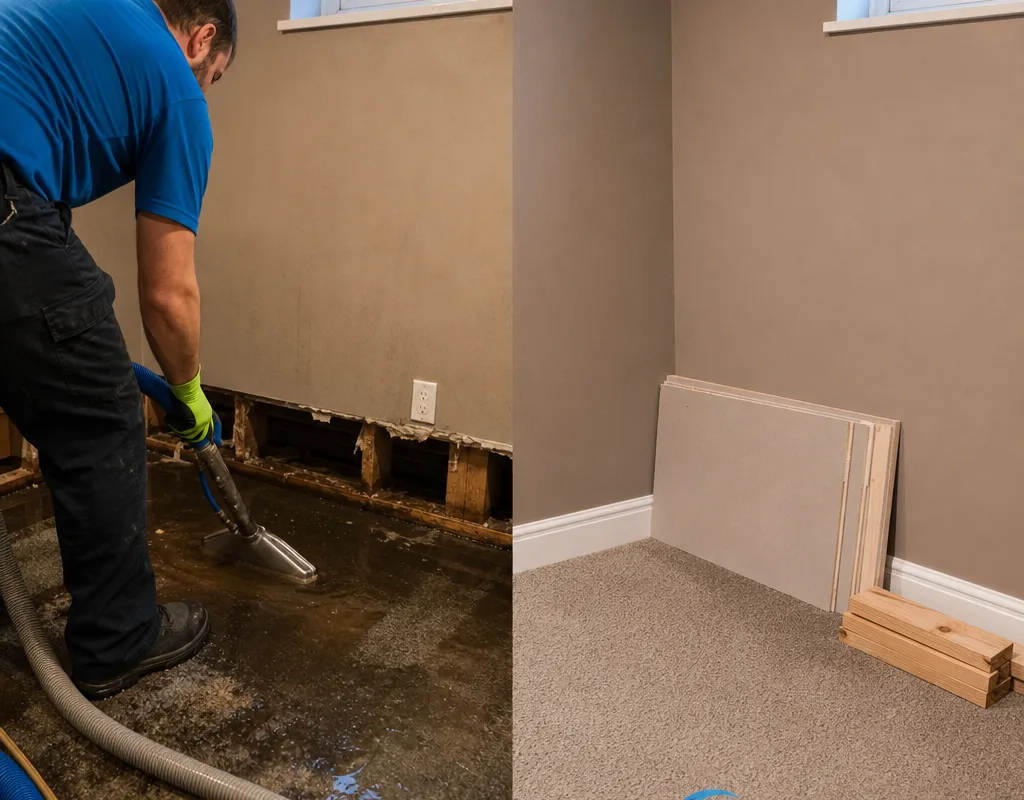
Before-and-after view of a flooded finished basement corner followed by the dry area ready for repair
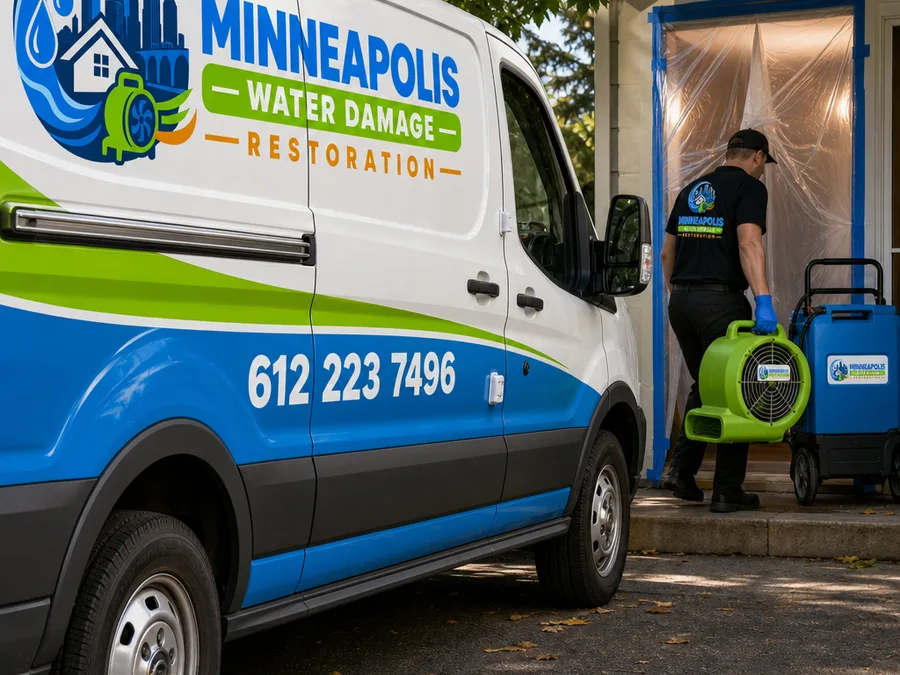
Technician setting up air movers and a dehumidifier with floor protection and safe cord management
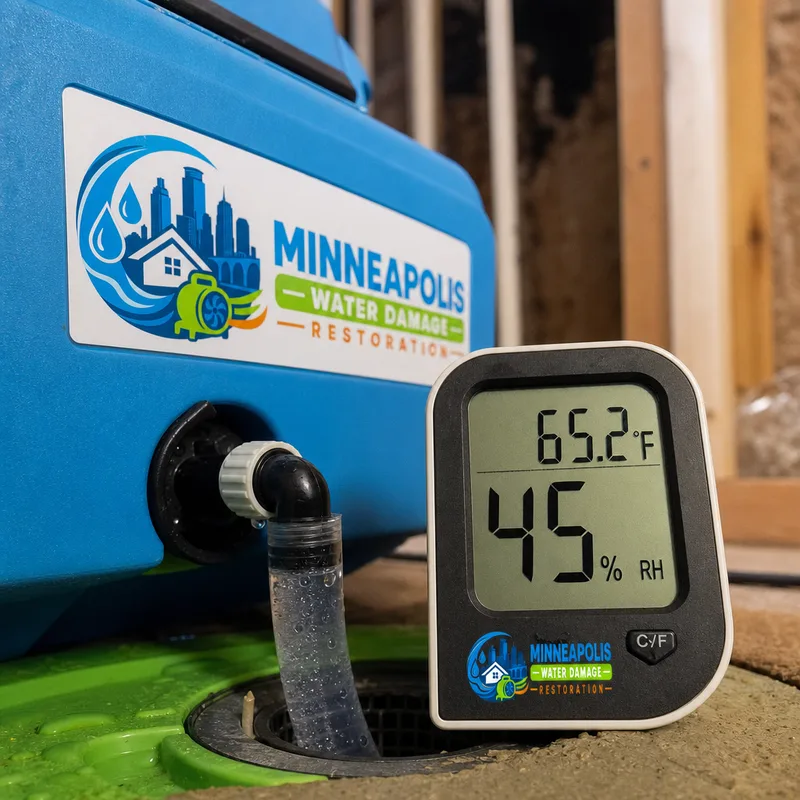
Dehumidifier drain setup and hygrometer readings documenting structural drying conditions
Request Emergency Service

If your property took on water today, the next best step is a moisture inspection and a written drying plan, so you know what needs to happen first and what can wait.

Call for Emergency Help

Minneapolis water restoration FAQs

How fast should water restoration start after a leak or flood?+

Water restoration should start as soon as the water source is stopped, ideally the same day, because moisture can wick into drywall, trim, and subfloors quickly. Early extraction and dehumidification reduce swelling, staining, and the risk of persistent odors. Even if visible water is gone, a moisture map can reveal wet areas behind baseboards or under flooring.

How long does the drying phase usually take?+

Most drying takes about 3 to 5 days, but the timeline depends on how much water entered the materials, what the assemblies are made of, and whether moisture is trapped in layers. Plaster walls, multiple flooring layers, and insulated exterior walls common in parts of Minneapolis can extend drying time. We confirm progress with moisture readings rather than relying on the calendar.

Do you need to remove drywall and flooring for water restoration?+

Not always, but removal is sometimes necessary to reach wet materials and allow airflow. Wet carpet padding often needs removal, and baseboards may be detached to dry the wall base properly. The decision is guided by moisture measurements and the water category, with the goal of drying effectively without unnecessary demolition.

Can you work with my insurance adjuster?+

Yes, we can provide documentation that insurers typically request, including moisture readings, equipment logs, and a written scope of work. Insurance coverage varies by policy and cause of loss, so we focus on clear, job-specific documentation and practical options you can approve.

What should I do right now while I wait for a technician?+

Stop the water source if you can do so safely, and avoid using electrical outlets or walking on sagging ceilings or wet carpet near electrical items. If safe, move small valuables and papers out of wet areas and open doors for ventilation. Avoid running household fans into wall cavities or disturbed materials if contamination is possible.

Do you handle water restoration for condos and multi-unit buildings in Minneapolis?+

Yes, condo and multi-unit losses are common and often require careful moisture mapping across shared walls, ceilings, and chases. Coordination with property management and neighbors matters, especially in denser areas like Downtown where water can migrate between units. We focus on containment, documentation, and a clear drying plan.

Need water restoration help in Minneapolis?

Tell us what happened and what areas are affected. We will schedule an inspection, map the moisture, and lay out a clear scope for extraction, drying, and the repairs needed to put the space back together.