+
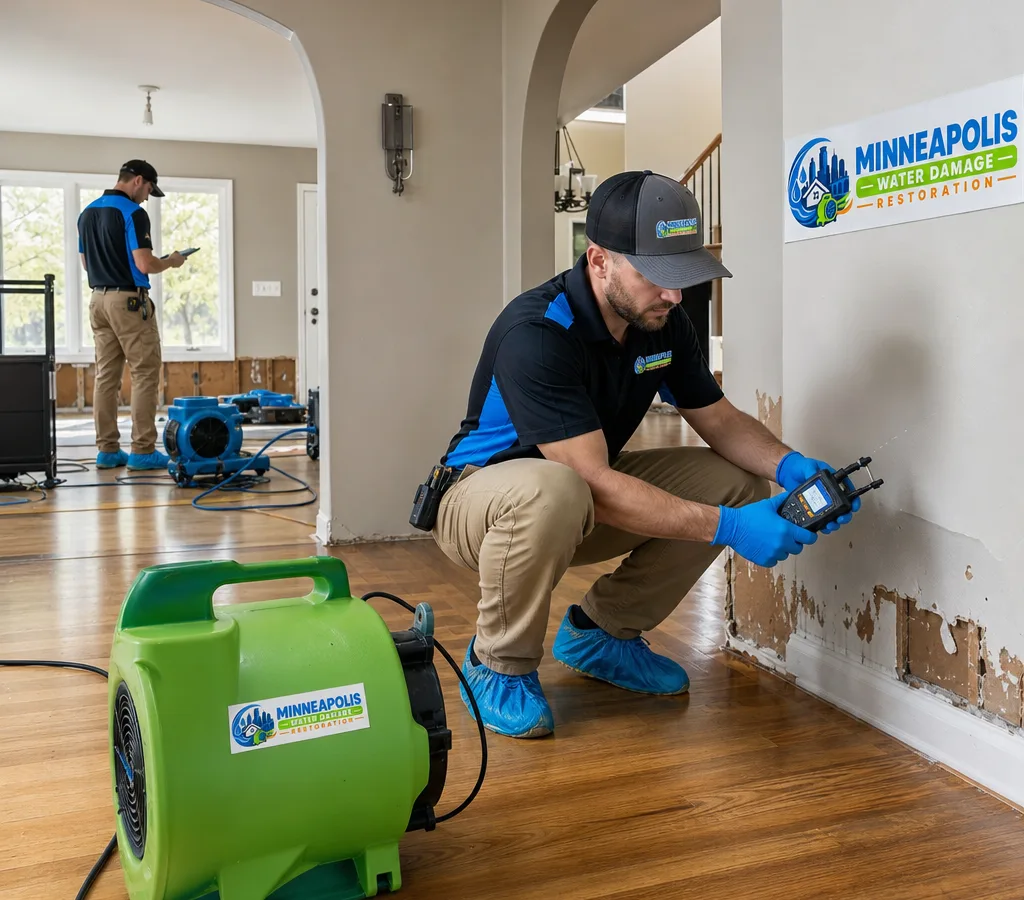
Moisture mapping, not guesswork
We use moisture meters and targeted inspection to determine what is wet, what is drying, and what needs removal. That keeps the scope tied to evidence.
Serving Minneapolis, Minnesota & surrounding areas
When your home is disrupted by water damage, get a clear plan, careful drying, and repairs that put everything back the right way—with a written scope, straightforward options, and respect for your space.
Minneapolis home restoration means more than removing wet materials. It is the coordinated work that takes a home from disruption back to livable: stabilizing affected areas, controlling moisture, preventing secondary damage, and rebuilding finishes so rooms match again.
In Minneapolis, water problems often show up fast in older housing stock. Finished basements in Longfellow and Nokomis, classic plaster walls in Powderhorn, and multi-level layouts around Uptown can all hide moisture in cavities, under flooring, or behind trim. Our job is to find what is actually affected, document it clearly, and restore the home in the right sequence so you are not paying to redo work later.
You can start with a quick on-site assessment. We will talk through safety concerns, immediate steps to protect belongings, and what the restoration scope should include before major work begins. If you need a team that handles the messy middle—from initial stabilization through repairs—you are in the right place.
Minneapolis Water Damage Restoration serves Minneapolis, including ZIP 55405, and nearby neighborhoods with restoration work that is organized, well documented, and built around clear communication.
We use moisture meters and targeted inspection to determine what is wet, what is drying, and what needs removal. That keeps the scope tied to evidence.
When materials need to come out, we plan for dust control and traffic paths. The goal is to keep unaffected rooms usable when possible.
Drywall, plaster, subfloor, and framing dry differently. We set equipment and monitoring around the structure, not a one-size routine.
You get a written scope outlining what will be removed, what will be saved, and what the rebuild will include so decisions are made early.
We explain what we found, what it means, and what changes the plan if conditions behind walls or under floors differ from expectations.
Restoration work is always specific to the home, but Minneapolis has a few patterns that change how we approach inspection and repair.
Older homes and remodel layers: In neighborhoods with many early 1900s homes, it is common to find mixed materials—plaster walls, newer drywall patches, and multiple flooring layers. That affects removal decisions and how we plan clean transitions in the rebuild.
Basements and finished lower levels: Water can travel under floating floors, behind baseboards, and into wall plates. We check perimeter walls, stairwells, and utility areas so the drying plan covers the full path, not only the visible wet spot.
Freeze-thaw season: Minnesota temperature swings can turn small leaks into bigger problems and slow drying when indoor conditions are unstable. We coordinate drying with safe heat, ventilation, and humidity control so materials reach a dry standard before repairs close them in.
If you are dealing with a water-related event and need immediate stabilization, our team also supports water damage restoration in Minneapolis as part of a complete restoration plan.
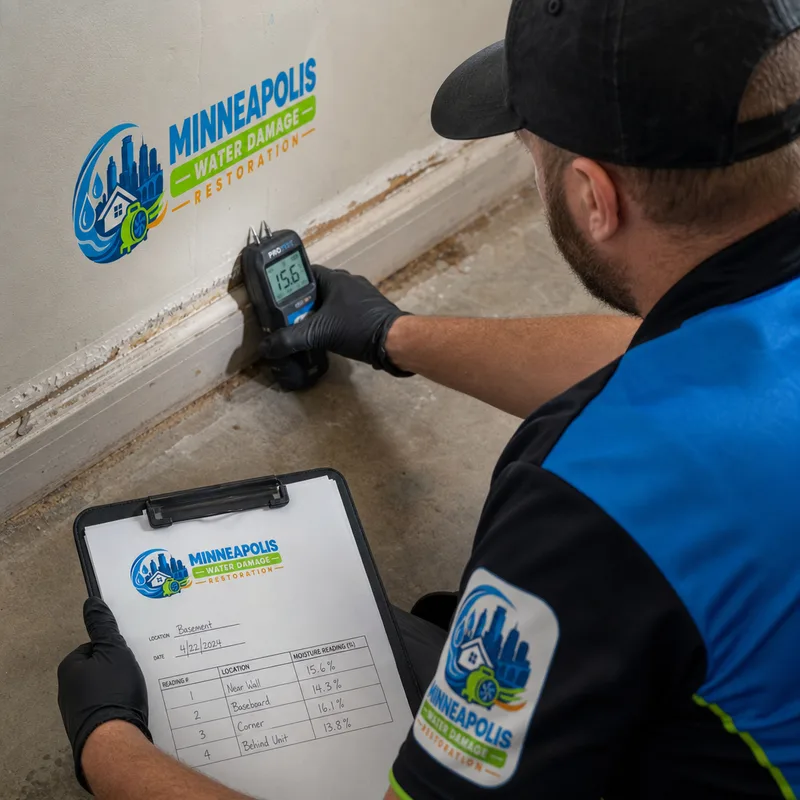
We inspect affected rooms, identify likely moisture paths, and outline what needs to happen first. You get a written scope setting expectations for timeline, access, and included areas.
We focus on safety and preventing spread through shutoff coordination when needed, protected walk paths, isolated belongings, and containment when removal work is required.
Materials that cannot be dried to an acceptable standard are removed in a planned way. We avoid unnecessary demolition and document what was opened and why.
We place drying equipment based on room layout and building materials, then monitor progress with moisture readings until the structure reaches an appropriate dry condition for rebuilding.
We rebuild what was removed, including insulation, drywall or plaster repair, trim, paint, and flooring transitions as needed, so the restored area matches and functions normally.
We walk the restored spaces with you, confirm completion against the written scope, and provide documentation of the work for your records.
Minneapolis home restoration typically ranges from about $1,500 to $6,000 for a small, contained area, while larger multi-room projects with significant material removal and repairs often run $8,000 to $25,000+ depending on finishes and complexity. A single room with limited drywall and baseboard replacement costs less than a basement with flooring replacement and multiple wall cavities opened.
Final price depends on affected square footage, how far moisture traveled, the type of materials—such as plaster versus drywall or hardwood versus carpet—access, and whether drying can be completed without extensive demolition. The exact cost is confirmed after an on-site assessment and written scope of work.
“They walked us through what had to be opened up and what could be saved. The drying plan made sense, and the repairs blended back into the room instead of looking patched.
“We appreciated the documentation and the step-by-step updates. The house was disrupted for a while, but the process felt controlled and the rebuild was done carefully.
Start time depends on current demand and the condition of the home, but we prioritize situations where ongoing moisture could cause additional damage. The first step is a fast assessment to set a safe stabilization plan, then we schedule drying and repair phases based on what the structure needs and what areas must be opened.
Porous materials that stay wet or cannot be cleaned and dried reliably—often insulation and some drywall assemblies—may need removal, while framing and many hard surfaces can often be dried when addressed early. The decision is based on moisture readings, material type, and whether water reached hidden cavities under floors or behind walls.
Yes. Many homeowners want one coordinated plan from stabilization through repairs so the timeline stays tight and restored rooms match the rest of the home. We outline the full scope up front, including drying-related work and repair work, so you can make decisions before walls are closed and finishes go back in.
Matching is a core part of quality restoration, but the best approach depends on what is existing and what products are available. We plan transitions carefully, explain when blending is possible, and flag early when a larger paint area or flooring run is the most realistic way to achieve a uniform look.
Small projects can sometimes move from drying to repairs within a week or two, while larger or more complex restorations can take several weeks. Timeline is driven by how long the structure needs to dry, how much material must be removed, and the scope of finish work such as flooring and paint.
If it is safe, limit foot traffic in the affected area, move items off wet floors, and avoid running fans that could spread moisture or dust into other rooms. If you suspect the issue is still active, prioritize stopping the source and keeping the space stable until we can inspect and set a proper restoration plan.
Tell us what happened and what areas are affected. We will schedule an on-site assessment in Minneapolis, explain the restoration steps, and provide a straightforward scope for drying and repairs.